

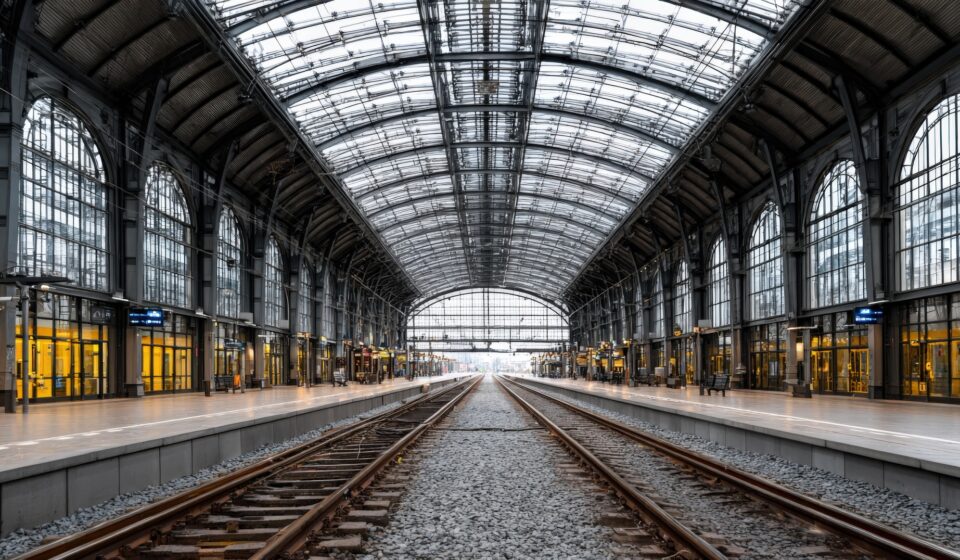

Railway stations are among Britain’s most recognisable public buildings.
For millions of passengers, they are practical places used for commuting, travelling and changing trains. Yet many also represent remarkable achievements in architecture and engineering.
From elaborate Victorian termini to modern transport interchanges, railway stations reflect changing ideas about design, technology and the role of public spaces.
Their history reveals how the arrival of the railway transformed British towns and cities.
The Railway Boom and the Need for New Buildings
The rapid expansion of Britain’s railway network during the nineteenth century created a demand for an entirely new type of public building.
Early stations were often relatively modest, but increasing passenger numbers and the growing importance of rail travel encouraged companies to construct larger facilities.
Stations needed to accommodate ticket offices, waiting rooms, platforms, luggage handling and railway operations.
They also became symbols of commercial success.
Railway companies frequently invested in impressive architecture to demonstrate their ambition and financial strength.
The result was a generation of buildings that combined practical engineering with elaborate decorative design.
The Grandeur of Victorian Railway Architecture
Many of Britain’s best-known stations date from the Victorian period.
Architects used styles including Gothic Revival, classical and Italianate influences to create buildings that conveyed importance and permanence.
London St Pancras is a particularly striking example.
Its celebrated Gothic Revival frontage, associated with the Midland Grand Hotel, stands alongside the vast engineering achievement of the station’s historic train shed.
The combination demonstrates how architecture and structural engineering developed together during the railway age.
Other stations incorporated towers, ornate entrances, decorative brickwork and substantial public halls.
For passengers arriving in major cities, these buildings often created a powerful first impression.
Engineering Beneath the Architecture
The architectural appearance of a railway station is only part of its story.
Large stations required innovative engineering solutions to cover platforms while allowing trains, passengers and railway staff to move safely.
Iron and later steel structures made increasingly ambitious roof spans possible.
Glass was used extensively to introduce natural light into spaces that might otherwise have been dark and smoky.
The great train sheds of the nineteenth century remain important examples of industrial engineering.
Their scale was particularly impressive when compared with many other buildings of the period.
Some historic structures have survived through careful maintenance and restoration, while others have been altered or replaced as railway requirements changed.
Stations as Gateways to Cities
Railway stations helped shape the identity of the places they served.
A major terminus could influence the development of surrounding streets, hotels, shops and commercial districts.
Businesses often established themselves near stations to benefit from passenger traffic and access to transport.
Over time, railway districts became important parts of urban life.
Stations also served as meeting places and points of arrival for people moving between different regions.
For some travellers, the station building was their first experience of a city.
This gateway function helps explain why prominent railway stations were often designed with such care.
They were not merely places to board trains; they represented the destinations beyond them.
The Challenges of Modernisation
Historic railway stations must continue to function in a transport system very different from the one for which they were originally designed.
Passenger numbers, accessibility requirements, safety standards and modern railway technology all create demands for change.
Introducing lifts, escalators, new ticketing facilities and improved circulation routes can be complicated within protected historic buildings.
Conservation projects must balance the preservation of significant architectural features with the needs of contemporary passengers.
Some stations have undergone major redevelopment, while others have benefited from more targeted improvements.
Successful projects can preserve the character of historic structures while making them easier and more comfortable to use.
Sheffield’s Own Railway Heritage
Sheffield provides an interesting example of the relationship between railway development and industrial growth.
The city’s rail connections were important to the movement of people and goods during its development as a major industrial centre.
Sheffield railway station, originally opened in the nineteenth century, has undergone substantial changes over time.
Its setting has also been transformed, particularly through improvements to the surrounding public spaces.
The nearby Sheaf Square area and its prominent steel sculpture create a visual connection between the station and Sheffield’s industrial identity.
It demonstrates how railway environments can reflect both historic significance and modern civic design.
Railway Stations Beyond Transport
Today, many stations accommodate shops, cafés, restaurants and other facilities alongside their transport functions.
Some have become destinations in their own right because of their architecture or cultural significance.
Historic station buildings may attract visitors interested in photography, engineering or local history.
Others host exhibitions, public art or community activities.
These uses reinforce the role of stations as shared public spaces.
At the same time, their primary purpose remains moving passengers efficiently and safely.
The most effective station environments manage to combine these different functions without compromising accessibility or the travel experience.
Preserving an Important Part of Britain’s Heritage
Britain’s railway stations tell the story of industrialisation, technological progress and changing urban life.
Their architecture reflects the ambitions of the people who built them, while their continued use demonstrates the lasting importance of rail transport.
Preserving significant stations does not mean preventing change.
It means recognising which features deserve protection while allowing buildings to serve future generations.
Whether a station is a grand Victorian terminus or a modest regional building, it can offer valuable insight into the development of the community around it.
For travellers willing to look beyond departure boards and platform numbers, Britain’s railway stations are often worth exploring in their own right.